

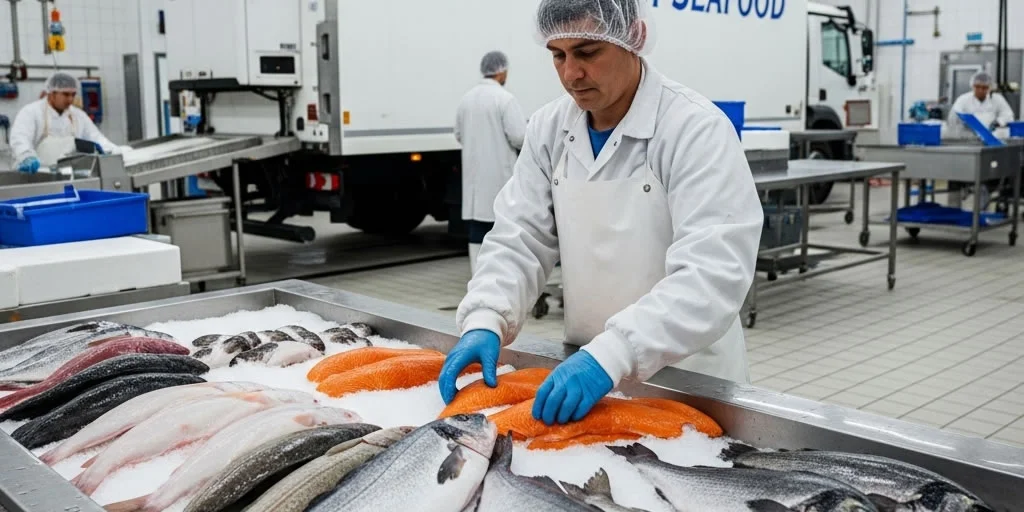
Few industries have less margin for temperature error than seafood. From the moment a catch comes off the boat, the clock is running, and every hour spent outside safe temperature ranges eats directly into shelf life, quality, and ultimately profit. For wholesalers and processors working out of Perth, managing that cold chain reliably is less a nice-to-have and more the entire business model.
Unlike many food categories, seafood doesn’t forgive small lapses. A few degrees of drift during transport or a delay in getting product into proper storage can be the difference between premium-grade stock and a batch that has to be marked down or written off entirely.
The Narrow Window Between Catch and Cold Storage
Fresh seafood has one of the shortest safe handling windows of any perishable product. Bacterial growth accelerates rapidly once product sits above safe holding temperatures, and unlike red meat or poultry, there’s often very little visual indication that quality has already started slipping.
This puts enormous pressure on the early stages of the supply chain, particularly for smaller and independent operators who don’t have the scale of a large processing facility behind them. Common pressure points include:
- Getting fresh catch into proper cold storage immediately after landing, often at odd hours, is far easier when a purpose-built cool room installation has been designed around seafood handling workflows.
- Holding stock safely through processing, grading, and packing
- Managing seasonal catch volumes that can swing dramatically week to week
- Keeping product cold through final-mile delivery to restaurants, markets, and retailers
Building Storage Capacity That Matches Catch Volume
Seafood supply is inherently unpredictable. A good week on the water can mean triple the usual volume coming through the door, and permanent cold storage sized for an average week simply can’t absorb that kind of swing without compromising quality somewhere in the process.
This is exactly the kind of variability that flexible refrigeration solves well. Rather than under-building for peak season and losing product, or over-building fixed infrastructure that sits half-empty most of the year, more processors are choosing to hire and buy cool rooms as catch volumes demand it. It lets a business scale storage capacity to the season, not the other way around.
Frozen Stock as a Buffer Against Volatility
Beyond fresh-chilled handling, frozen storage plays a critical role in smoothing out the inherent volatility of seafood supply. Product that can’t move fast enough through fresh channels, or stock built up ahead of a known demand spike like a long weekend or festival period, needs reliable freezer capacity to hold its quality until it’s needed.
For operators without the capital tied up in fixed freezer infrastructure, a dependable freezer room hire Perth solution provides exactly that buffer. It means a strong catch doesn’t have to become a wasted one, and it gives smaller wholesalers the same flexibility to hold stock that larger, better-capitalised competitors take for granted.
Getting Product to Market Without Breaking the Chain
The cold chain doesn’t end at the processing facility door. Getting fresh and frozen seafood from storage to restaurants, fish markets, and retail counters across Perth requires the same temperature discipline the product has had every step of the way up to that point.
Wholesalers running their own delivery fleets, or servicing multiple drop points across a single run, increasingly rely on mobile cool room hire Perth options to keep that final leg airtight. Having refrigerated capacity that can move with the delivery schedule, rather than being fixed to one site, closes a gap that’s cost more than a few operators quality claims and repeat business over the years.
Treating Cold Storage as the Backbone of the Business
For seafood wholesalers, cold storage isn’t a supporting function sitting off to the side of the real business — it effectively is the business. Every dollar of margin in this industry depends on product arriving at its destination in the same condition it left the water, and that only happens with infrastructure built to handle genuine seasonal swings rather than an idealised average week.
Operators who plan their storage around realistic peak volumes, hold buffer freezer capacity for unpredictable catches, and keep transport refrigeration reliable end to end tend to be the ones who protect their margins when conditions get difficult — whether that’s an unusually big haul, a heatwave, or a delivery run that runs longer than planned.
As demand for fresh, quality seafood across Perth continues to grow, the wholesalers treating their cold chain as core infrastructure, not an operational afterthought, are the ones best positioned to handle whatever the next catch brings in.
